Learn Guitar Fretboard Notes Faster: The Brain Science Method
By Carvel Avis in Lessons
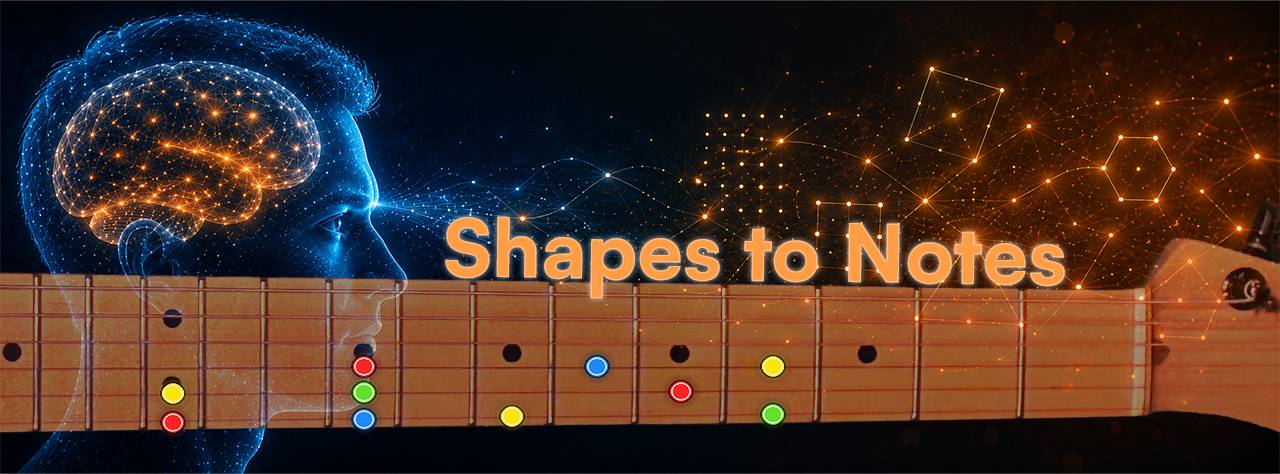
Here's something most guitar players never find out: you don't have to learn the notes on the fretboard one painful note at a time. Your brain isn't built for that — and once you understand how it actually works, the whole thing gets dramatically easier.
This post is a companion to the Guitar Creative video Play What You Feel, Part 1 — Connect the Dots, but it's designed to stand on its own. The Connect the Dots method teaches you to navigate the fretboard using clusters of chord notes grouped by position — called shapes — rather than trying to memorize every individual note. Key Weaver, the Guitar Creative fretboard tool, makes this visual and interactive. If you haven't tried it yet, you can get a free account at guitarcreative.com.
Whether you've been practicing with the method or you're just discovering it, what follows will change how you think about learning the fretboard.
Your Brain May Already Have a Head Start: Incidental Learning
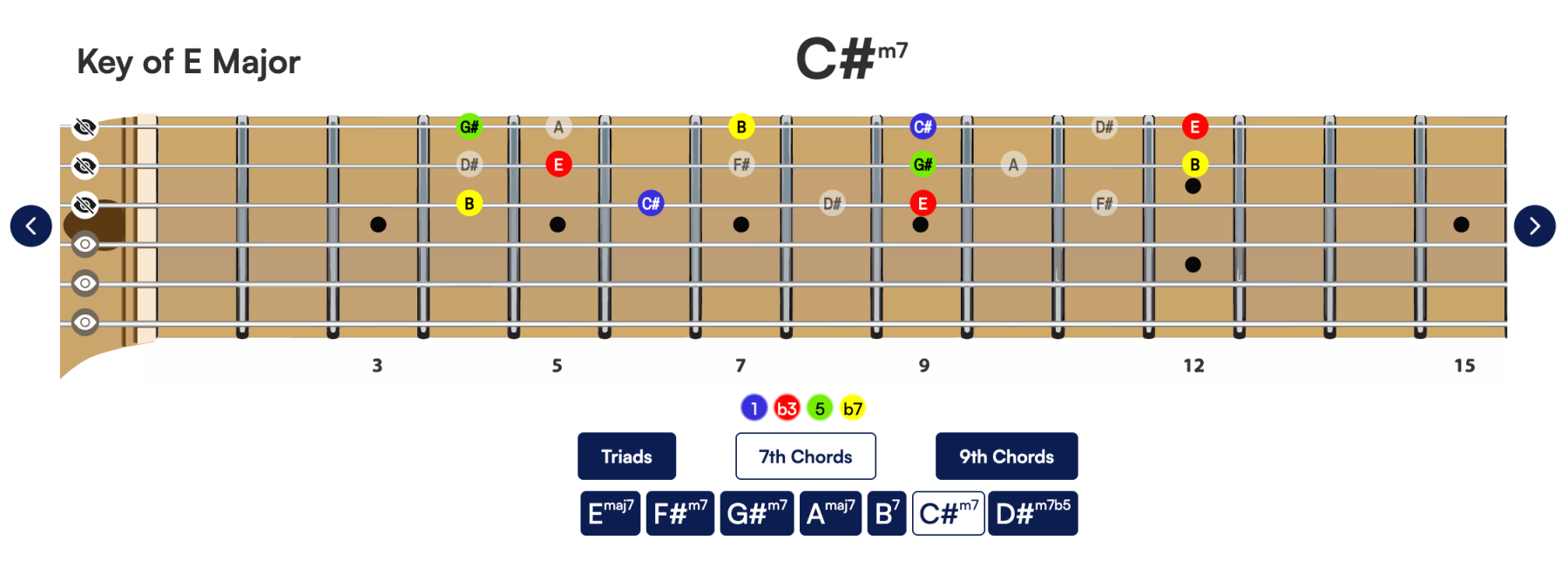
If you've been practicing with Key Weaver, you may have noticed that the note names are always visible on the diagram — even when you're focused on learning shapes rather than notes. That's intentional. Every time your eyes moved across that diagram, your brain was quietly filing those names away without you even trying.
Cognitive scientists call this incidental learning: the brain picks up information it wasn't consciously trying to learn, as a byproduct of focused attention nearby. If you've been using Key Weaver, you're already further along than you think. And if you're starting fresh, this is one more reason to use a visual tool that keeps the note names in view while you practice.
Why Shapes Make This Faster: Chunking
The reason this method works so fast isn't just repetition. It's because you're learning notes in a way that cooperates with how your brain stores information.
Think about how you read. You don't go letter by letter — whole words fire in your brain at once. The letters are still in there; you can spell the word if someone asks. But when you're actually reading, you're working with whole words, not letters.
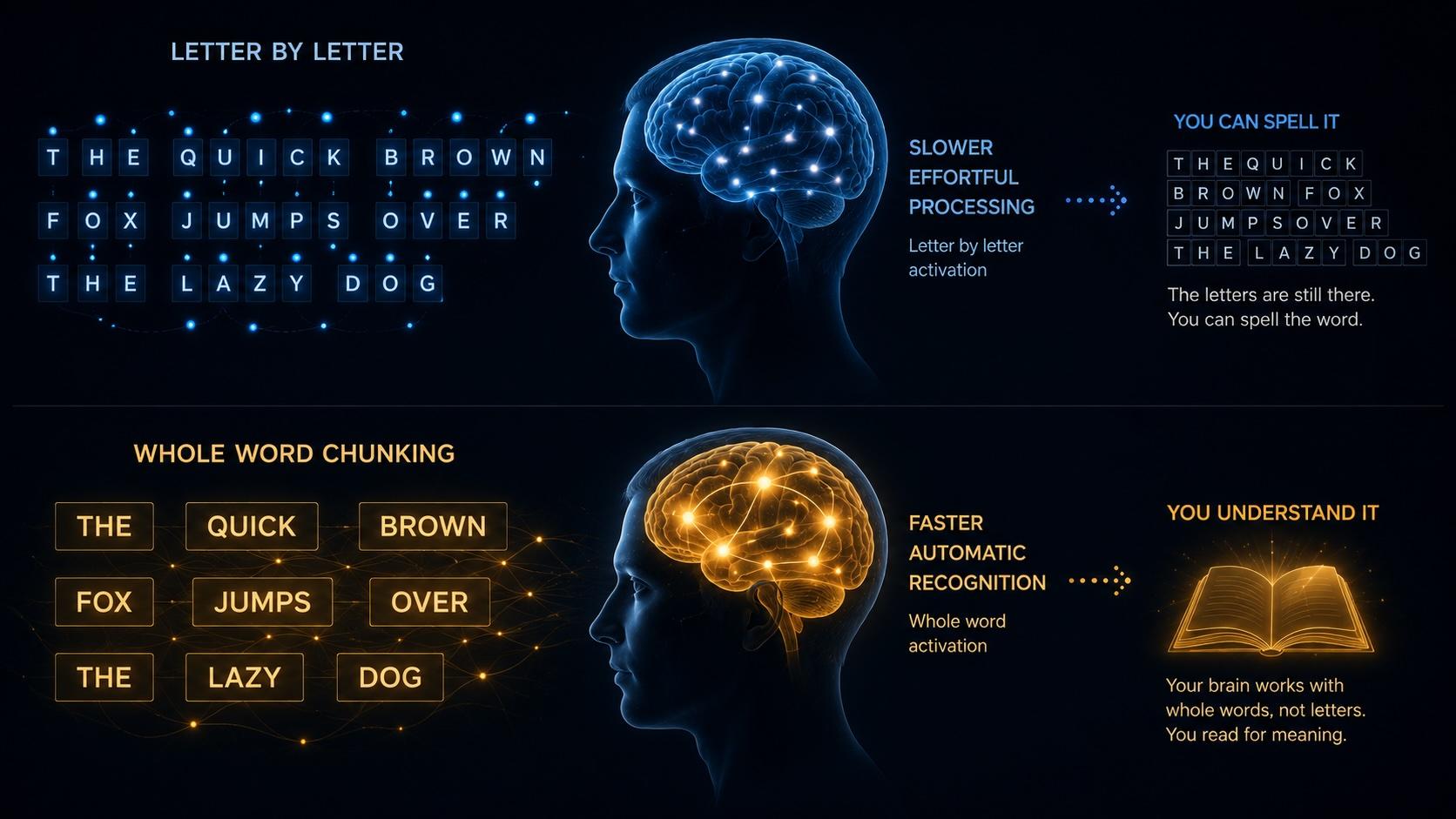
The shape is the word. The notes are the letters.
Once the notes are encoded inside a shape, they stop being separate individual things and become one thing. You picture the shape — and the notes come with it.
Neuroscientists call this chunking. Your brain stores a chunk of information as a single unit in memory. Studies of chess grandmasters showed they can reconstruct an entire board position from a five-second glance — not because they have better memory, but because the positions are stored as chunks. Novices see pieces. Experts see patterns.
Same thing with groups of notes.
The Practice Routine
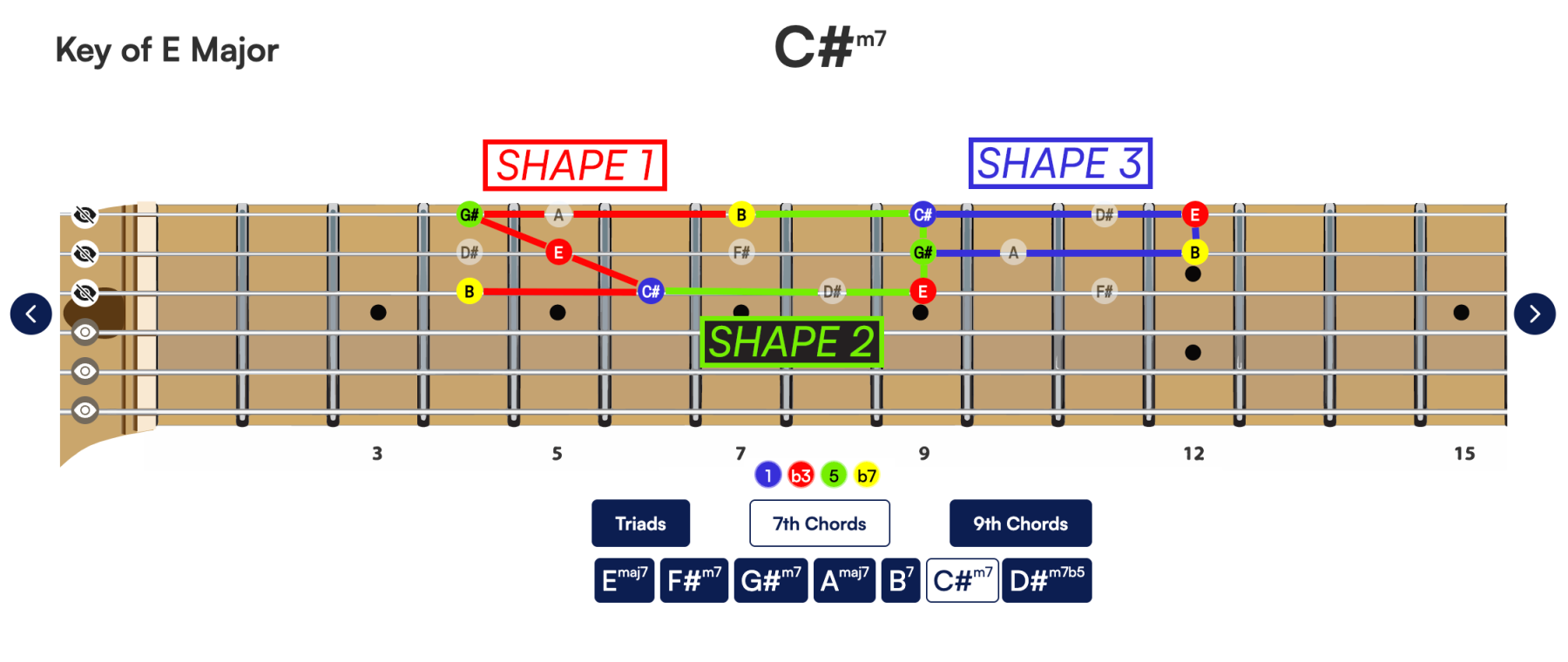
This routine works with any fretboard diagram, but it's designed around Key Weaver, which shows you the chord notes (color-coded) and the surrounding scale notes in each shape, with note names always visible. Each position on the neck where those chord notes cluster together is a shape — and that shape is your learning unit.
Here's the routine that locks the note names in for good.
Step 1: Play the Chord Notes in Sequence
Select one shape. Find the chord notes — the color-coded ones in Key Weaver. Play them from the lowest note to the highest, then back down. Slow and deliberate. You're not improvising — you're mapping.
Step 2: Say the Note Names Out Loud as You Play
As you play each chord note, say its name out loud. C#. E. G#. B. Don't just think them — say them. Speaking activates a different memory pathway than thinking alone.
Step 3: Test Yourself Without Looking
Look away from the diagram. Play the chord notes again and say the names. Don't worry if you miss some — just notice which ones you're unsure about. Go back, check what you missed, and do another pass.
Step 4: Micro Break
Close your eyes. 60 seconds. No phone. Just let it go. This isn't optional — this is when your brain is building the neural pathways that make the notes stick.
Step 5: Repeat for Each Shape
Work through all your shapes using the same process. Once you can name the chord notes in each shape from memory, you're done with that session.
Step 6: Add the Scale Notes
On your next session, run the same routine with the full set of notes in each shape — chord notes and surrounding scale notes together. By now the chord notes are anchored, so the scale notes have something to attach to.
Why the Micro Breaks Are Non-Negotiable
Researchers at the National Institutes of Health found that during short rest periods, the brain replays a newly practiced skill at roughly 20 times the speed you practiced it. You're not resting. Your brain is building new neural pathways.
This is part of a process called automaticity — what actually happens is the brain physically rewires itself. Skills start in the prefrontal cortex — the slow, conscious, effortful part of the brain. As they become automatic, they migrate to the basal ganglia and cerebellum — the brain's fast processing centers. A new pathway forms that routes around the slow, conscious part entirely.
Once the note names live in that fast lane, they stop consuming working memory. Think of working memory as a limited number of slots — only so many things can occupy your conscious focus at once. When the note names become automatic, those slots get freed up. That's when something shifts in your playing. You stop searching for the note — and start playing what you feel.
New Keys Get Easier Fast
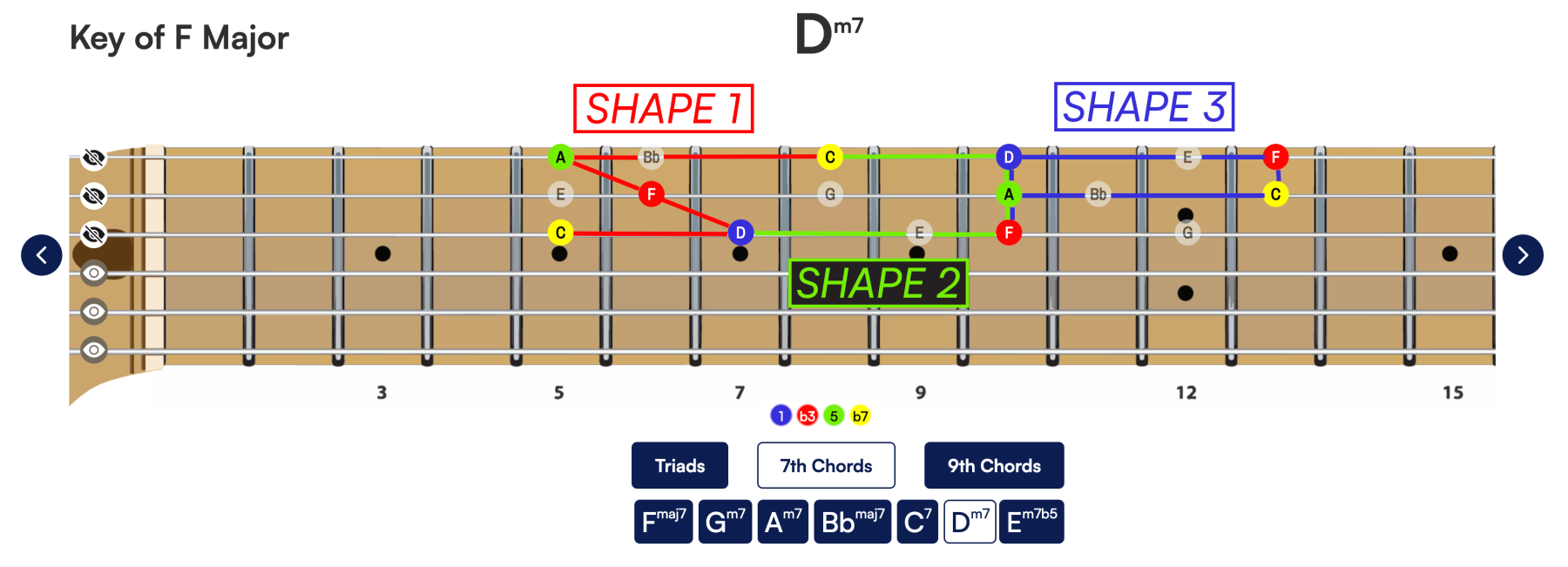
Once you know the notes inside a shape in one key, learning the same shape in a new key is dramatically faster. Your brain doesn't start over — it activates the same framework and just updates the note values inside.
Cognitive psychologists call this schema updating. The shape is a mental container. C# becomes D. G# becomes A. The whole structure transfers. The second key takes a fraction of the time the first did.
Key Weaver makes all of this easier by showing you the note names, chord notes, and scale structure in one view — with backing tracks built in for practice.